
Windows 11’s market share is not increasing, and that’s concerning because Windows 10’s extended support ends in eight months. In Germany, 48 percent, or around 21 million devices, are still running Windows 10. We’re not talking about businesses, as these numbers only represent “private households.”
Windows 10 support officially ended on October 14, 2025, unless you signed up for Extended Security Updates (ESU). With ESU, you can still get security updates and minor fixes or improvements, but the catch is that extended support ends on October 13, 2026. After October 13, 2026, you need to either ditch your PC or upgrade to Windows 11.
Now, according to the EU-based cybersecurity firm ESET, 21 million PCs (48%) in German households are running Windows 10. This number does not include businesses, which also prefer to stay on Windows 10, but it’s quite surprising that consumers are still rejecting Windows 11, especially as ESU support ends in less than eight months.
In Germany, Windows 10 had roughly 24 million installs in August 2025, and Windows 11 had about 17 million in August 2025. So, roughly 3.6–3.7 million PCs were upgraded in that period, and it looks like most of that shift was from Windows 10 to Windows 11.
“Microsoft’s current operating system is found on approximately 49.5 percent (21.5 million) of desktop PCs and notebooks, an increase of around 3.6 million compared to August 2025,” ESET noted in their German report spotted by Windows Latest.
The “older Windows” group, which includes XP and 7, fell to 840,000 now, which implies it was about 1 million in August 2025.
“Germany struggles with change, including switching operating systems. Windows 10 remains extremely popular among Germans compared to other countries worldwide. Official support ended in October 2025. Anyone who delays the switch further or doesn’t upgrade to extended support is walking a tightrope,” warns Alexander Opel, IT security expert at ESET.
Signing up for Windows 10 ESU is really easy, which could affect Windows 11 adoption
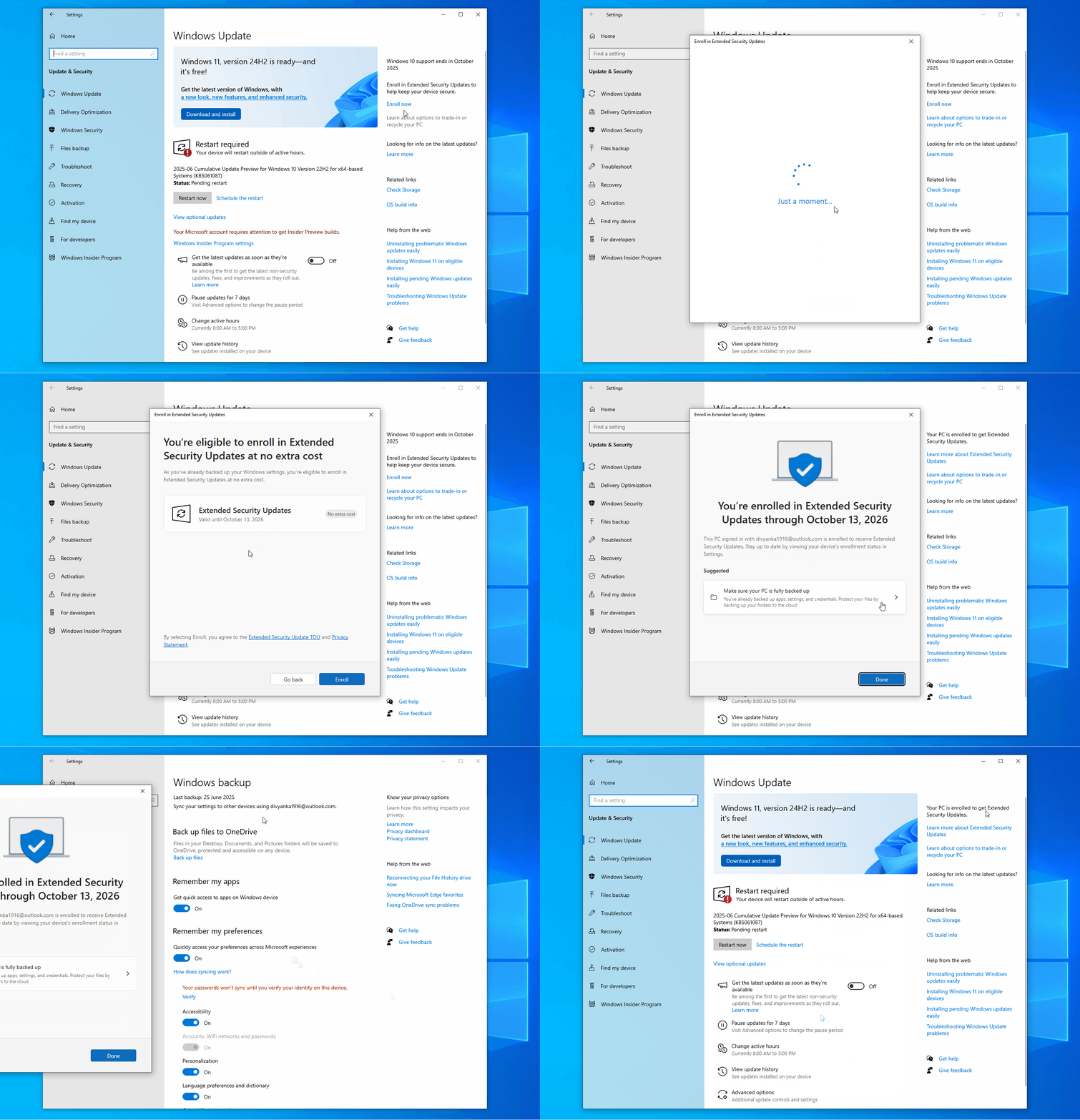
The same Windows Update page that warns about the end of support makes it super easy to keep using Windows 10. Most people don’t care as long as Windows 10 works and is supported. As you can see in the above video or the screenshot below, you just need to click on ‘Enroll now’ and accept the terms to sign up for ESU.
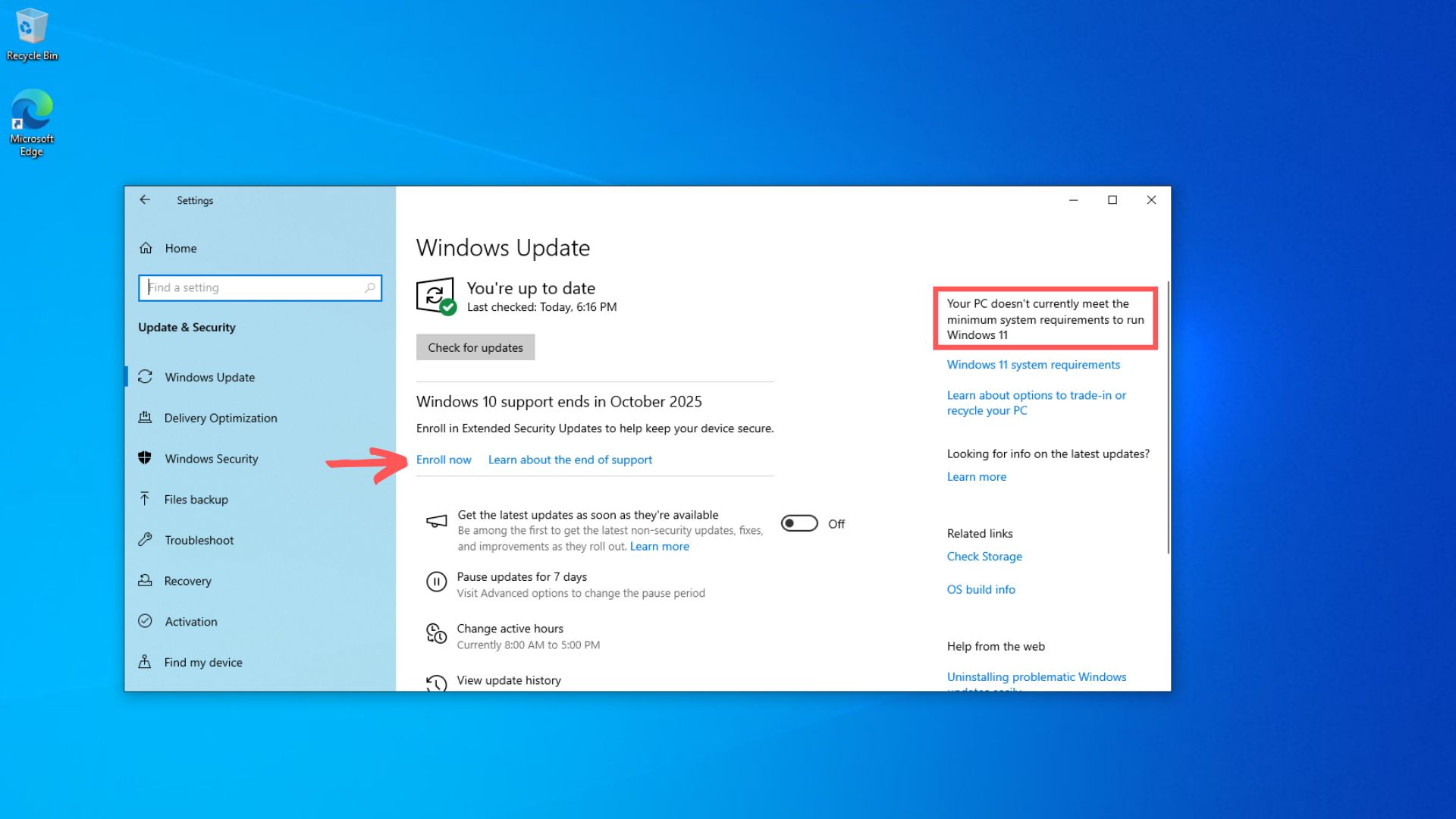
Windows 10 ESU can be activated in less than a minute if you’re already using a Microsoft account, and most households do use it.
But as I mentioned, you can’t keep using Windows 10 for your entire life. After mid-October 2026, anyone still on Windows 10 with ESU would no longer receive security updates.
Microsoft could soon begin showing full-screen pop-ups to remind users that it’s time to ditch Windows 10 and get Windows 11, particularly a Copilot+ PC.
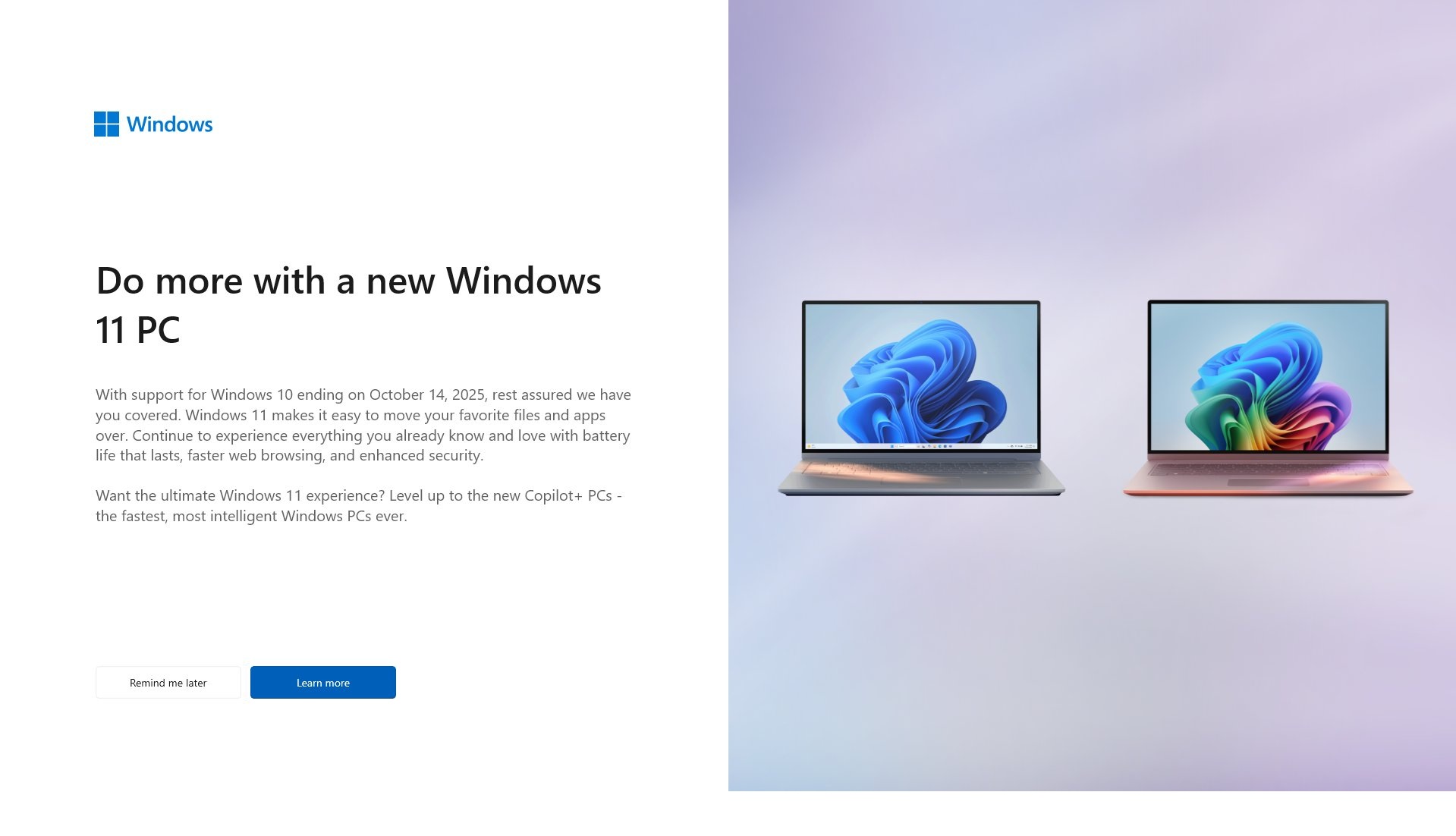
In fact, Microsoft recommends that you recycle your old PC and use the money to buy a new Copilot+ PC if your current hardware does not officially support Windows 11.
Windows 11 is popular among gamers
We don’t know how well Windows 11 is doing outside Europe, but Steam’s December 2025 survey tells us a bit more about household PCs.
According to Steam, most gamers prefer Windows, which is still dominant at 94.23% (down 0.56 points), but Windows 11 is now clearly the main Windows version at 66.60% (up 1.01), while Windows 10 has fallen to 27.51% (down 1.55).
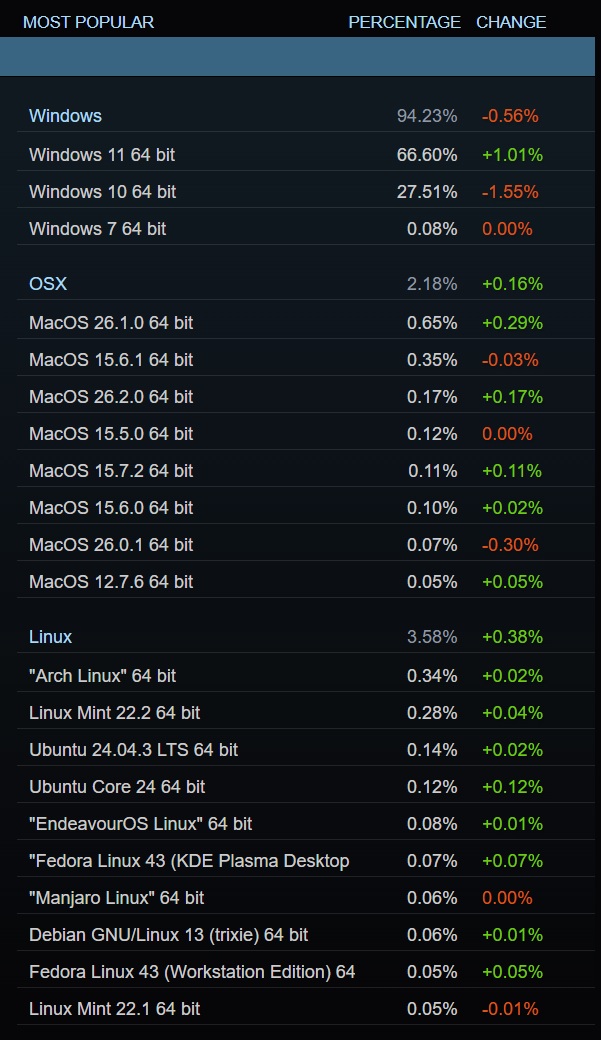
On Steam, Windows 7 is basically gone at just 0.08%. And if you count only Windows PCs in Steam’s survey (not macOS or Linux), Windows 11 makes up about 71% of the total Windows share, which suggests most gamers who can upgrade have already moved to it.
Methodology: Windows 11 share among Windows PCs = (Windows 11 share of all PCs) ÷ (Windows share of all PCs), so 66.60 ÷ 94.23 = 70.68% (71% rounded off).
Windows 11 is popular among gamers, and that makes sense because gamers do not have a choice. While Windows 11 might feel bloated, it still delivers better performance, thanks to newer drivers, scheduling improvements, and more.
What about you? Have you upgraded to Windows 11? If yes, why? And if you’re still on Windows 10, why? Let me know in the comments below.
I personally use both Windows 10 and Windows 11, and I still prefer Windows 10 because it feels faster. I also like being able to pin the taskbar to the top.
The post Windows 10’s extended support ends in eight months, but users are still rejecting Windows 11, at least in Germany appeared first on Windows Latest
Leave a Comment
No comments yet. Be the first to comment!